
Do I Need Glasses or Contacts? How to Tell What’s Right for You
Signs You May Need Vision Correction and How to Choose the Best Option
If you’ve found yourself squinting at road signs, struggling to read small print, or experiencing eye strain after a long day, you may be wondering: “Do I need glasses or contacts?” It’s one of the most common questions eye care professionals hear, and the answer depends on several factors, including your vision needs, lifestyle, eye health, and personal preferences.
At The Plano Eye Care Center, we help patients throughout Plano and surrounding North Texas communities find vision correction solutions that fit their lives. Whether you’re a student at Plano Senior High School, a professional commuting through the Dallas-Fort Worth Metroplex, or an active adult who enjoys outdoor activities at Oak Point Park, clear vision is essential for everyday comfort and confidence.
Our experienced team takes a personalized approach to eye care, combining advanced diagnostic technology with compassionate service. During a comprehensive eye exam, we evaluate your vision, discuss your goals, and help you determine whether glasses, contact lenses, or a combination of both is the best fit for your lifestyle. If you’re unsure which option is right for you, understanding the signs that you need vision correction is the first step.
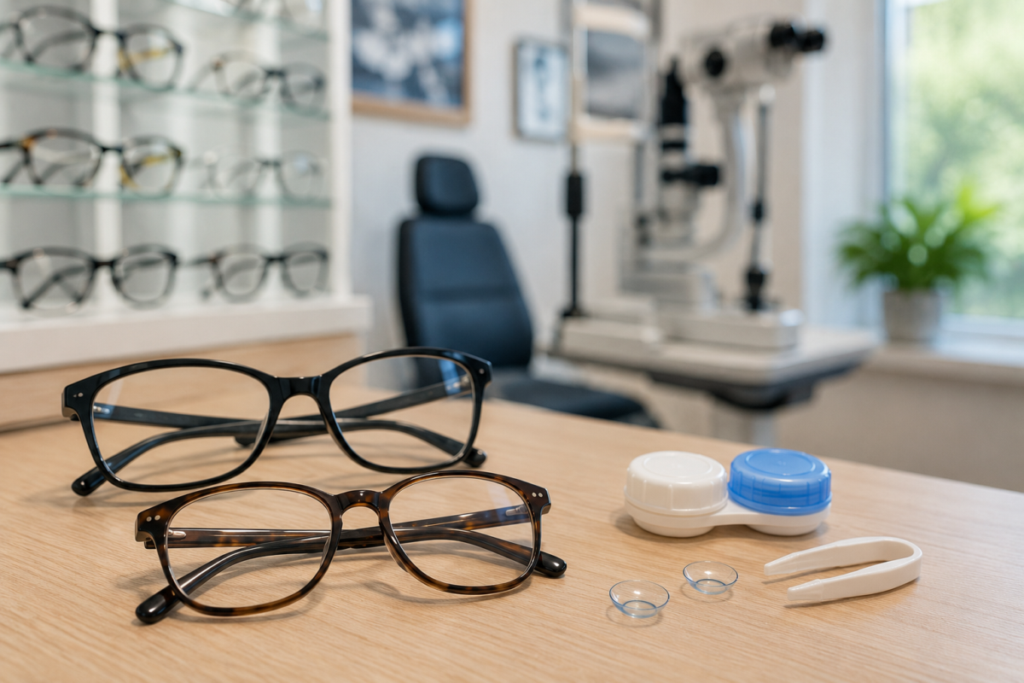
Common Signs You May Need Glasses or Contacts
Vision changes often occur gradually, making them easy to overlook. Many people adapt to blurry vision without realizing how much clearer life could be with proper correction.
Some common signs that you may need glasses or contact lenses include:
- Blurred vision when reading or driving
- Frequent squinting
- Eye strain after screen use
- Headaches, especially at the end of the day
- Difficulty seeing at night
- Holding books or devices closer than usual
- Trouble focusing between near and distant objects
According to the American Optometric Association, regular comprehensive eye exams are essential because many vision problems develop slowly and may not cause obvious symptoms right away.
If you notice any of these warning signs, scheduling an eye exam can help identify the cause and determine the most effective treatment.
Glasses vs. Contacts: What Are the Differences?
Many patients assume one option is better than the other, but both glasses and contact lenses offer unique advantages.
Benefits of Glasses
Glasses are often the simplest vision correction solution. They are easy to use, require minimal maintenance, and can serve as a fashion accessory.
Advantages include:
- Easy to put on and remove
- No direct contact with the eye
- Lower maintenance requirements
- Protection from wind, dust, and debris
- Availability of blue light filtering and transition lenses
Glasses are particularly popular among professionals, students, and individuals who spend significant time on computers.
Benefits of Contact Lenses
Contact lenses provide clear vision without frames and can offer greater freedom during physical activities.
Advantages include:
- Wider field of vision
- No frames obstructing peripheral vision
- Ideal for sports and exercise
- No fogging during temperature changes
- Compatibility with sunglasses and safety eyewear
Modern contact lens technology has made lenses more comfortable than ever, with daily disposable options becoming increasingly popular among patients seeking convenience.
Factors to Consider When Choosing Between Glasses and Contacts
The best vision correction option depends on more than your prescription. Lifestyle and eye health play an important role in determining what will work best.
Consider these factors:
Your Daily Activities
Active individuals who exercise regularly may prefer contacts because they stay in place during movement. Those who work primarily at a desk may appreciate the convenience of glasses.
Eye Health Conditions
Some patients with chronic dry eye syndrome may find glasses more comfortable than contact lenses. Others may benefit from specialized contact lens options designed for dry eyes.
Maintenance Preferences
Contacts require cleaning, proper hygiene, and routine replacement. Glasses require less daily maintenance but may need occasional adjustments and cleaning.
Personal Style Preferences
Many patients enjoy having both options available. Glasses can enhance personal style, while contacts provide flexibility for special occasions or sports.
At The Plano Eye Care Center, we frequently help patients create a customized vision correction plan that includes both glasses and contact lenses.
Can You Wear Both Glasses and Contact Lenses?
Absolutely.
Many people choose to alternate between glasses and contacts depending on their schedule and activities. For example, you might wear contacts during work hours, exercise sessions, or social events, then switch to glasses in the evening.
This approach offers several benefits:
- Increased flexibility
- Reduced contact lens wear time
- Greater eye comfort
- Backup vision correction if contacts cannot be worn
Having both options available ensures that you’re prepared for any situation while maintaining clear vision throughout the day.
Why an Eye Exam Is the Best Way to Know for Sure
Online vision tests and self-assessments may provide clues, but they cannot replace a comprehensive eye exam.
During your visit, our team will evaluate:
- Visual acuity
- Refractive errors (nearsightedness, farsightedness, astigmatism)
- Eye coordination and focusing ability
- Overall eye health
- Contact lens candidacy
We also screen for eye diseases that may not cause symptoms in their early stages, including glaucoma and macular degeneration.
For many patients, the biggest surprise is how much clearer and more comfortable their vision becomes after receiving the correct prescription.
Regular eye exams remain one of the most important investments you can make in your long-term eye health and quality of life.
Find the Vision Correction Solution That’s Right for You
If you’re asking yourself, “Do I need glasses or contacts?” the best way to get an accurate answer is through a comprehensive eye examination. Every patient has unique vision needs, and the right solution depends on your eyes, lifestyle, and goals.
At The Plano Eye Care Center, we’re proud to serve Plano, Frisco, Allen, McKinney, and surrounding North Texas communities with personalized eye care and expert guidance. Whether you’re considering your first pair of glasses, exploring contact lenses, or looking for updated vision correction options, our team is here to help.
Ready to discover whether glasses, contacts, or both are right for you? Contact us today to schedule your comprehensive eye exam and take the first step toward clearer, more comfortable vision.