
When Should You See an Eye Doctor for Vision Problems?
You should see an eye doctor when you notice persistent blurry vision, frequent headaches or eye strain, difficulty seeing at night, double vision, eye pain, redness, or other unexplained changes in your eyesight. Sudden vision loss, new flashes or a sudden increase in floaters, a curtain-like shadow over your vision, or severe eye pain can require immediate medical attention.
At The Plano Eye Care Center, we understand that it is not always easy to know whether a vision change is temporary or a sign that your eyes need professional attention. Some problems may simply require an updated glasses or contact lens prescription, while others can indicate an eye condition that benefits from early diagnosis and treatment. A comprehensive eye exam provides an opportunity to evaluate your vision as well as the health of your eyes. By helping patients recognize important warning signs and understand when to schedule an eye exam, our team aims to make protecting your eyesight a straightforward part of your overall health care.
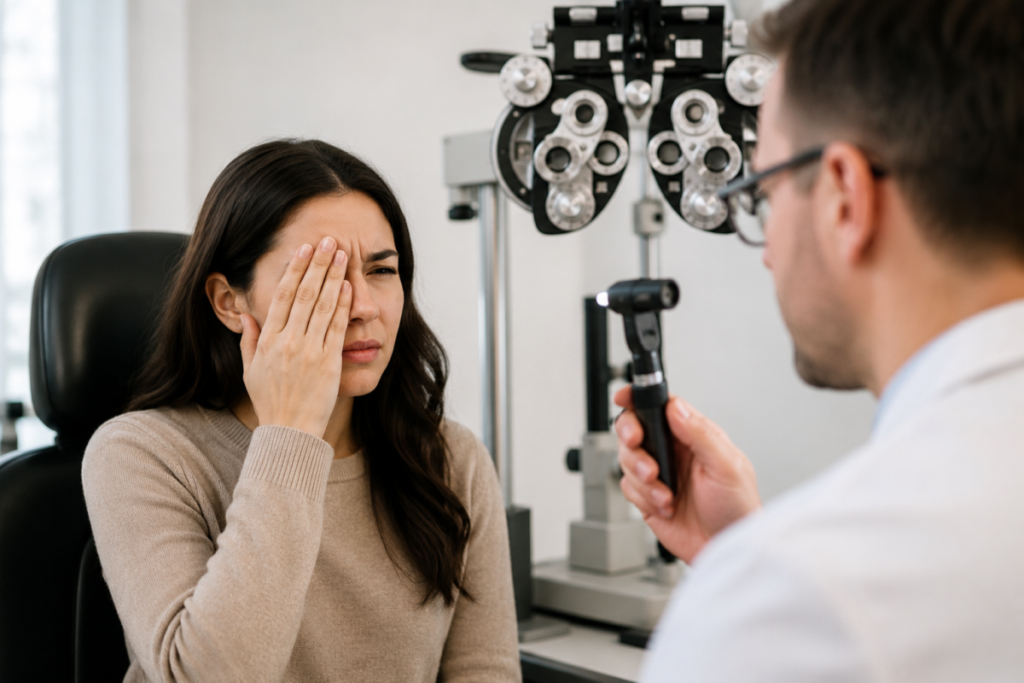
Signs You May Need an Eye Exam for Vision Changes
Changes in vision should not automatically be dismissed as normal aging, fatigue, or too much screen time. The National Eye Institute (NEI) notes that many eye diseases have no early symptoms or warning signs, which is one reason comprehensive dilated eye exams can play an important role in detecting problems early.
What Vision Changes Mean You Should Schedule an Eye Exam?
Persistent or recurring changes in how clearly or comfortably you see are good reasons to schedule an eye exam. Even gradual changes can indicate that your prescription has changed or that another eye health issue needs attention.
Common reasons to see an eye doctor include:
- Blurry vision at near or far distances
- Difficulty focusing
- Frequent squinting
- Double vision
- Increasing difficulty seeing at night
- Halos around lights
- Frequent headaches associated with visual tasks
- Eye strain that does not improve with breaks
- Increased sensitivity to light
- Changes in color perception
The National Eye Institute identifies blurry vision, double vision, eye pain, redness, and difficulty seeing in low light among symptoms that warrant discussing your eye health with a professional.
For people who wear glasses or contact lenses, gradual blurry vision may simply mean it is time for a new prescription. An eye exam is the best way to determine whether a refractive change or another issue is responsible.
When Is a Vision Problem an Eye Emergency?
Sudden or severe vision changes can be medical emergencies and should be evaluated immediately. Waiting to see whether symptoms disappear could put your eyesight at risk when a time-sensitive condition is involved.
Seek urgent medical attention for symptoms such as:
- Sudden loss or significant decrease of vision
- A sudden increase in floaters
- Flashes of light
- A dark curtain, veil, or shadow moving across your field of vision
- Severe eye pain
- Eye trauma or chemical exposure
- Sudden double vision
- Vision changes accompanied by neurological symptoms
According to the National Eye Institute, a sudden increase in floaters, flashes of light, or a curtain or shadow over the visual field can be warning signs of a retinal detachment. Retinal detachment is a medical emergency because delaying treatment can increase the risk of permanent vision loss.
The American Academy of Ophthalmology also advises that sudden changes involving flashes and floaters require prompt evaluation, particularly when they occur together or are accompanied by loss of peripheral vision.
If a chemical gets into your eye, begin flushing the eye with clean water immediately and seek appropriate emergency medical guidance. Eye injuries should not be rubbed or treated by attempting to remove deeply embedded objects yourself.
Are Headaches and Eye Strain Reasons to See an Eye Doctor?
Frequent headaches or persistent eye strain can be reasons to schedule an eye exam, especially when symptoms occur during reading, computer work, driving, or other visually demanding activities.
Digital screens and prolonged near work can contribute to tired or uncomfortable eyes. The National Eye Institute recommends the 20-20-20 rule during extended screen use: every 20 minutes, look approximately 20 feet away for at least 20 seconds.
You can also reduce everyday visual strain by:
- Positioning screens at a comfortable distance.
- Reducing glare from windows and overhead lighting.
- Blinking regularly when using digital devices.
- Taking breaks during extended periods of close work.
- Wearing your current glasses or contact lens prescription as directed.
If these adjustments do not improve your symptoms, an eye exam can help determine whether an outdated prescription, focusing problem, dry eye, or another issue may be contributing.
Can You Have an Eye Problem Without Noticing Vision Loss?
Yes. Some eye diseases can develop without obvious symptoms in their early stages. Good central vision does not necessarily mean that every part of your eye is healthy.
The National Eye Institute emphasizes that a comprehensive dilated eye exam can detect certain eye diseases before a person notices symptoms. This can be particularly important for people who have risk factors for conditions such as glaucoma or diabetic eye disease.
Your risk may be influenced by factors including:
- Age
- Family history of eye disease
- Diabetes
- High blood pressure
- Previous eye injuries or surgery
- Certain medications
- Your personal eye health history
This is why waiting for blurry vision is not always the best strategy. Preventive eye exams give your eye doctor an opportunity to evaluate changes that may not yet be affecting everyday vision.
How Often Should You Have Your Eyes Checked?
The right eye exam schedule depends on your age, health, symptoms, vision correction needs, and individual risk factors. People experiencing new vision problems should not wait for their next routine appointment to have those symptoms evaluated.
The American Optometric Association recommends annual comprehensive eye examinations for most adults, with more frequent care when a person has certain risk factors or when clinically indicated. Individual recommendations can vary, so your eye doctor can establish a schedule based on your specific needs.
Children, adults who wear contact lenses, older adults, and people with health conditions that can affect the eyes may need different follow-up schedules.
Most importantly, a routine schedule should never override new symptoms. If something about your vision suddenly seems different, contact an eye care professional rather than waiting until your next planned exam.
Frequently Asked Questions About Seeing an Eye Doctor
Should I see an eye doctor if my vision suddenly becomes blurry?
Yes. Sudden unexplained blurry vision should be evaluated promptly, particularly if it affects one eye, causes significant vision loss, or occurs with pain, flashes, floaters, weakness, numbness, difficulty speaking, or other sudden symptoms. Depending on the symptoms, emergency medical care may be appropriate.
Are flashes and floaters always an emergency?
Occasional longstanding floaters can be common, but new flashes, a sudden increase in floaters, or a curtain or shadow in your vision require prompt medical evaluation. These symptoms can occur with a retinal tear or detachment.
Should I get an eye exam if I keep getting headaches?
Frequent headaches related to reading, screen use, driving, or focusing can be a reason to schedule an eye exam. An eye doctor can determine whether a vision or eye-related issue may be contributing, although headaches can also have causes unrelated to the eyes.
Can an eye exam find problems before I notice symptoms?
Yes. According to the National Eye Institute, some eye diseases have no early symptoms. A comprehensive dilated eye exam can help detect certain eye diseases before noticeable vision loss occurs.
Know When Your Eyes Are Asking for Help
Vision changes can range from a simple prescription change to symptoms requiring urgent medical attention. Persistent blurry vision, headaches, eye strain, night vision difficulties, or other recurring changes deserve an eye exam, while sudden vision loss, severe pain, new flashes or floaters, and curtain-like shadows should be treated more urgently.
Paying attention to changes and seeking appropriate care early can help protect something you rely on every day: your sight.
Noticing changes in your vision? Contact The Plano Eye Care Center to schedule an eye exam and get personalized guidance about your eye health.