
Why Does My Teenager’s Vision Keep Changing, and When Should They See an Eye Doctor?
Teenagers often experience vision changes because their eyes continue developing during adolescence. Nearsightedness may develop or worsen, while increased screen time and demanding schoolwork can contribute to eye fatigue and discomfort. Regular comprehensive eye exams help identify changes in vision, monitor eye health, and determine whether glasses, contact lenses, or other treatments are needed.
Between school, homework, sports, and social activities, teenagers rely on their eyesight more than ever. But adolescence is also a time when vision can change, sometimes without obvious warning signs.
Your teen might suddenly struggle to see the classroom board, complain about headaches after studying, or spend hours looking at a screen without realizing how much strain their eyes are experiencing.
At The Plano Eye Care Center, we understand that teenagers have unique vision needs. Our team helps adolescents and their families recognize changes in eyesight, understand healthy eye care habits, and explore appropriate vision correction options. Whether your teen is preparing for high school, learning to drive, or becoming more independent, protecting their vision is an important part of supporting their overall development.
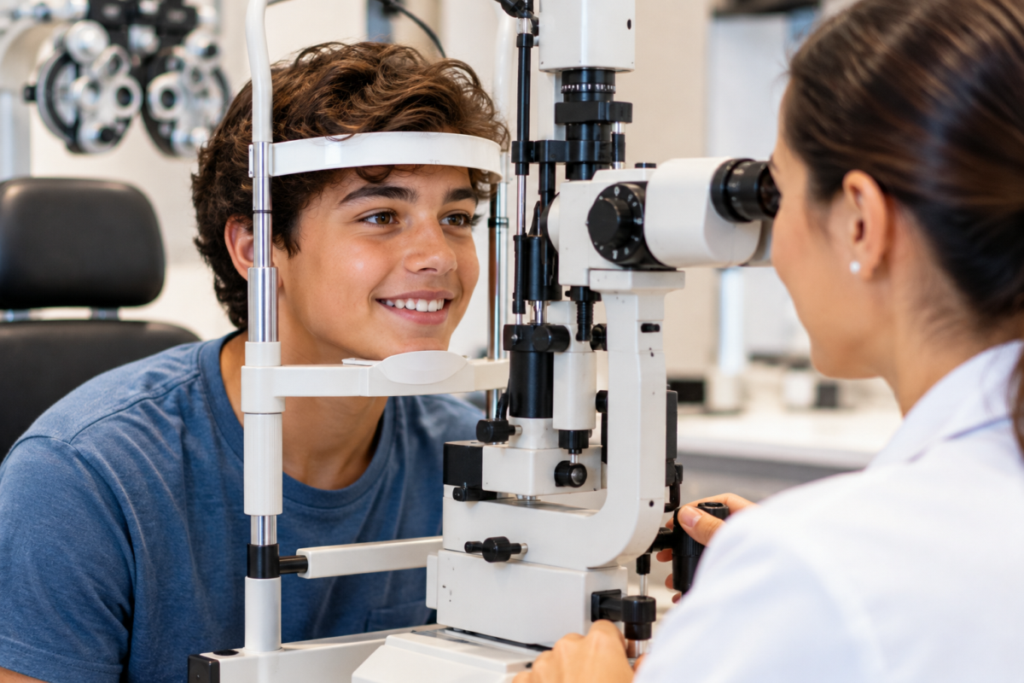
Teenage Eye Health: Understanding Vision Changes During Adolescence
Adolescence brings physical changes throughout the body, including continued growth and development of the eyes.
Some teenagers experience noticeable changes in their prescriptions, while others develop symptoms related to extended near work, digital devices, or underlying eye conditions.
Understanding which changes are common and which require professional attention can help parents make informed decisions about their teenager’s eye care.
Why Does Nearsightedness Often Get Worse During the Teenage Years?
Nearsightedness, also called myopia, commonly develops during childhood and may continue progressing through adolescence.
Myopia occurs when the eye focuses light in front of the retina rather than directly on it, often because the eye has grown too long.
Teenagers with myopia may notice that distant objects become increasingly blurry, even when their near vision remains clear.
Common signs include:
- Squinting to read classroom boards or distant signs
- Moving closer to televisions or screens
- Difficulty recognizing people from a distance
- Frequent changes in glasses or contact lens prescriptions
- Complaints about blurry distance vision
According to the National Eye Institute (NEI), myopia typically begins between ages 6 and 14 and can continue worsening into the early twenties.
Research also suggests that spending more time outdoors during childhood may reduce the risk of developing myopia.
Because myopia can progress during the teenage years, regular eye examinations are important for monitoring prescription changes and discussing appropriate treatment options.
For some teenagers, myopia management treatments may help slow progression. An eye doctor can determine whether these options are appropriate based on age, prescription, and other risk factors.
How Does Screen Time Affect Teenagers’ Eyes?
Extended screen use can contribute to digital eye strain, temporary blurry vision, dry eyes, and headaches, especially when teenagers spend long periods focusing without breaks.
Between school assignments, gaming, smartphones, and social media, many teenagers spend several hours each day using digital devices.
When concentrating on screens, people often blink less frequently. This can contribute to dryness and irritation.
Symptoms of digital eye strain may include:
- Tired or aching eyes
- Blurry vision after extended screen use
- Dryness, burning, or irritation
- Headaches during or after computer work
- Difficulty shifting focus between near and distant objects
The American Academy of Ophthalmology (AAO) recommends taking regular breaks during prolonged screen use to help reduce discomfort.
One practical strategy is the 20-20-20 rule: Every 20 minutes, look at something approximately 20 feet away for at least 20 seconds.
Teenagers can also improve visual comfort by keeping screens at a reasonable viewing distance, reducing glare, and remembering to blink regularly.
Screen time does not automatically cause permanent eye damage, but persistent symptoms should be evaluated by an eye care professional.
What Vision Problems Should Parents Watch for in Teenagers?
Blurred vision, frequent headaches, double vision, and difficulty focusing are important signs that a teenager may need an eye examination.
Unlike younger children, teenagers can often describe changes in their eyesight. However, they may not mention symptoms unless those symptoms interfere with daily activities.
Some teens gradually adapt to blurry vision and assume their experience is normal.
Parents should pay attention to changes such as:
- Declining ability to see classroom presentations
- Complaints of headaches after homework
- Difficulty concentrating during visually demanding tasks
- Squinting while watching television
- Avoiding reading or activities requiring sustained focus
- Eye discomfort while wearing contact lenses
- Trouble seeing road signs when learning to drive
Vision problems can sometimes affect classroom participation, sports performance, and confidence.
For teenagers preparing to drive in Plano and throughout the Dallas-Fort Worth area, clear distance vision is particularly important for recognizing road signs, traffic signals, pedestrians, and other vehicles.
Sudden vision loss, new double vision, severe eye pain, or flashes and floaters accompanied by a curtain or shadow in the vision require prompt medical evaluation rather than waiting for a routine appointment.
Are Glasses or Contact Lenses Better for Teenagers?
Both glasses and contact lenses can provide effective vision correction for teenagers. The best choice depends on prescription needs, lifestyle, personal preferences, and the ability to follow proper care instructions.
Glasses are convenient, easy to maintain, and do not require direct contact with the eyes.
Contact lenses may appeal to teenagers who participate in sports, prefer not to wear glasses, or want greater flexibility in their appearance.
However, contact lenses require responsible hygiene practices.
Teenagers considering contacts should understand the importance of:
- Washing and drying their hands before handling lenses.
- Following the recommended replacement schedule.
- Avoiding sleeping in lenses unless specifically prescribed for overnight wear.
- Never using tap water to clean or store contact lenses.
- Removing lenses and contacting an eye care professional if redness, pain, or unusual irritation develops.
The CDC emphasizes that proper contact lens hygiene is essential for reducing the risk of eye infections.
At The Plano Eye Care Center, a contact lens evaluation can help determine whether contact lenses are suitable for your teenager and which options may best meet their needs.
How Often Should Teenagers Get Comprehensive Eye Exams?
Teenagers should receive comprehensive eye exams regularly, with the schedule based on their vision, eye health, and individual risk factors.
The American Optometric Association recommends annual comprehensive eye examinations for school-age children and adolescents, although an eye doctor may recommend a different schedule based on individual circumstances.
Teens with progressive myopia, contact lenses, or existing eye conditions may need additional follow-up visits.
Parents can also encourage healthy vision habits between appointments:
- Spend time outdoors regularly.
- Take breaks during extended screen use.
- Maintain appropriate lighting while reading or studying.
- Wear UV-protective sunglasses outdoors.
- Use protective eyewear during activities with eye injury risks.
- Get adequate sleep to support overall health and comfort.
These habits complement professional eye care but do not replace comprehensive examinations.
Frequently Asked Questions About Teenage Vision Changes
Is it normal for a teenager’s glasses prescription to change every year?
Yes. Prescription changes are common during adolescence, especially for teenagers with progressing myopia. Regular eye exams help monitor these changes and determine whether updated correction or myopia management is appropriate.
Can puberty affect eyesight?
Vision can change during adolescence as the eyes continue growing and developing. However, persistent blurred vision should not automatically be attributed to puberty and should be evaluated by an eye doctor.
Can too much phone use make my teenager nearsighted?
Research has linked prolonged near work with myopia risk, although the relationship is complex and involves genetics, outdoor time, and other factors. Excessive phone use can also contribute to temporary eye strain and dryness.
Should teenagers have an eye exam before learning to drive?
A comprehensive eye exam is a good idea, particularly if a teenager has trouble seeing distant objects or has not had a recent examination. Clear vision is essential for recognizing road signs, hazards, and changing traffic conditions.
Help Your Teen See Clearly Through Every Stage of Adolescence
The teenage years bring exciting milestones, from greater academic independence to sports, extracurricular activities, and learning to drive. Healthy vision helps teenagers participate comfortably and confidently in these experiences.
At The Plano Eye Care Center, we’re here to help your teenager navigate vision changes with personalized attention and comprehensive eye care.
Is your teenager experiencing blurry vision, frequent headaches, or changes in their eyesight? Contact The Plano Eye Care Center today to schedule a comprehensive eye exam and help protect their vision for the years ahead.