
What Are the Best Foods to Eat for Better Eye Health and Vision?
The best foods for better eye health include leafy green vegetables, colorful fruits and vegetables, fatty fish, eggs, nuts, seeds, and citrus fruits. These foods provide nutrients such as lutein, zeaxanthin, omega-3 fatty acids, vitamins A, C, and E, and zinc, which help support healthy vision, protect the retina, and reduce the risk of certain age-related eye diseases when combined with regular comprehensive eye exams.
Eating well benefits your entire body, including your eyes. At The Plano Eye Care Center, we encourage patients to think of nutrition as one important part of lifelong vision care. While no single food can prevent every eye condition, a balanced diet rich in eye-friendly nutrients can support healthy vision at every age. Combined with routine comprehensive eye exams, healthy lifestyle choices, and personalized eye care, good nutrition helps protect your eyesight for years to come. Our team is committed to helping patients understand how everyday choices, including what they eat, contribute to maintaining clear, comfortable vision.
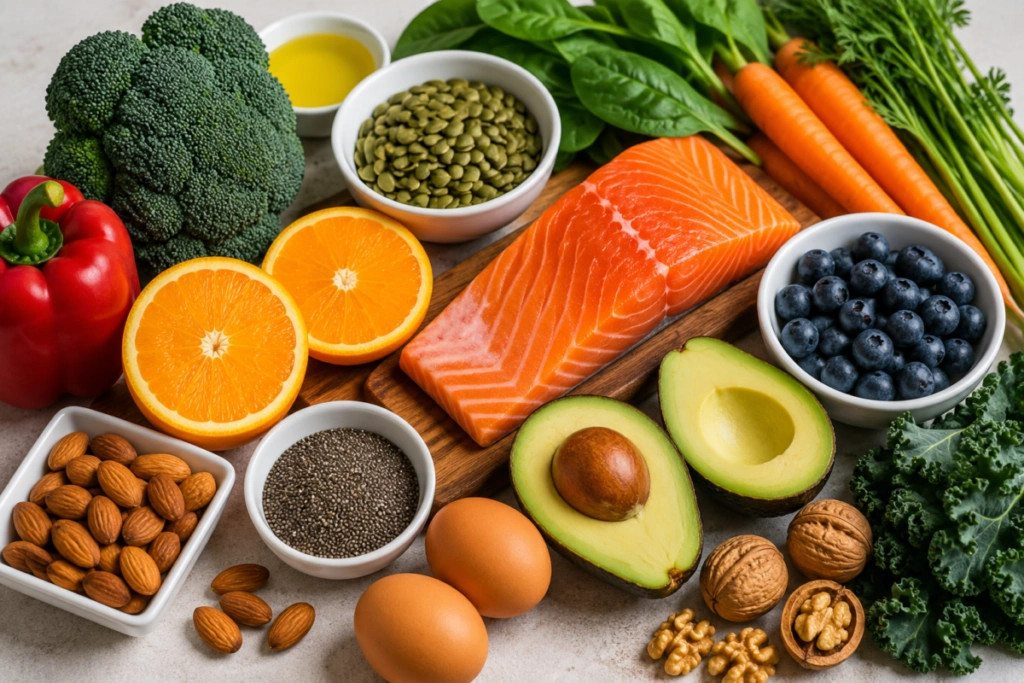
Nutrition for Healthy Eyes: Foods That Support Long-Term Vision
The nutrients you eat every day play an important role in maintaining the health of your eyes and reducing oxidative stress that can damage delicate eye tissues over time.
Which Nutrients Are Most Important for Eye Health?
Several vitamins and minerals are especially beneficial for maintaining healthy vision.
Key nutrients include:
- Lutein and zeaxanthin, which help protect the retina and filter harmful blue light.
- Vitamin A, which supports night vision and healthy corneas.
- Vitamin C, a powerful antioxidant that supports healthy blood vessels in the eyes.
- Vitamin E, which helps protect eye cells from oxidative damage.
- Omega-3 fatty acids, which support retinal health and may help relieve dry eye symptoms.
- Zinc, which helps transport vitamin A from the liver to the retina.
According to the National Eye Institute (NEI), lutein and zeaxanthin are naturally concentrated in the retina, where they help protect eye tissue from oxidative damage and light exposure.
What Foods Are Best for Protecting Your Vision?
The best diet for eye health includes a wide variety of colorful, nutrient-rich foods.
Try adding these foods to your weekly meals:
Leafy Green Vegetables
- Spinach
- Kale
- Collard greens
- Swiss chard
These vegetables are among the richest natural sources of lutein and zeaxanthin.
Colorful Fruits and Vegetables
- Carrots
- Sweet potatoes
- Bell peppers
- Oranges
- Berries
These foods provide vitamins A and C along with antioxidants that help support healthy eye tissues.
Fatty Fish
- Salmon
- Tuna
- Sardines
- Trout
These fish are rich in omega-3 fatty acids, which help support retinal function and healthy tear production.
Other Vision-Friendly Foods
- Eggs
- Almonds
- Walnuts
- Sunflower seeds
- Beans
- Citrus fruits
Eating a variety of these foods provides your eyes with a broad range of protective nutrients.
Can Nutrition Help Prevent Eye Diseases?
A healthy diet supports long-term eye health, but it should not replace regular eye care.
Research shows that diets rich in antioxidants and certain nutrients may help lower the risk of some age-related eye diseases. According to the National Institutes of Health and the National Eye Institute, the AREDS2 formulation can help slow the progression of age-related macular degeneration (AMD) in people who already have intermediate AMD. However, these supplements are not recommended as a preventive treatment for everyone.
For most people, experts recommend focusing on a balanced, nutrient-rich diet first.
Should You Take Eye Vitamins or Supplements?
Most healthy adults can meet their nutritional needs through food.
Eye supplements may be appropriate for certain individuals with specific eye conditions, especially intermediate age-related macular degeneration, but they should only be taken under the guidance of an eye care professional.
Before starting supplements:
- Schedule a comprehensive eye exam.
- Discuss your personal risk factors.
- Ask whether an AREDS2 supplement is appropriate for you.
- Continue prioritizing healthy eating habits.
According to the National Center for Complementary and Integrative Health (NCCIH), current evidence supports AREDS2 supplements only for certain patients with AMD, not for preventing eye disease in the general population.
What Everyday Habits Support Healthy Vision Along with Good Nutrition?
Nutrition works best when combined with other healthy eye care habits.
For lifelong eye health:
- Schedule comprehensive eye exams regularly.
- Wear sunglasses that block 100% UVA and UVB rays.
- Stay physically active.
- Manage diabetes and blood pressure.
- Avoid smoking.
- Follow the 20-20-20 rule to reduce digital eye strain.
- Stay hydrated throughout the day.
Healthy lifestyle choices work together to protect your vision over time.
Frequently Asked Questions
Are carrots really good for your eyes?
Yes. Carrots are rich in beta-carotene, which the body converts into vitamin A. Vitamin A is essential for healthy vision, especially in low-light conditions, but carrots are just one of many foods that support eye health.
What is the best fruit for eye health?
Citrus fruits, berries, oranges, and kiwi are excellent choices because they are high in vitamin C, an antioxidant that supports healthy blood vessels and eye tissues.
Can a healthy diet improve blurry vision?
Nutrition supports overall eye health, but it usually does not correct blurry vision caused by refractive errors such as nearsightedness or farsightedness. A comprehensive eye exam can determine the underlying cause of blurry vision.
Do I need eye vitamins if I eat a healthy diet?
Most people who eat a balanced diet do not need specialized eye supplements. Certain patients with intermediate age-related macular degeneration may benefit from AREDS2 supplements, but these should only be taken after consulting an eye care professional.
Support Your Eye Health with The Plano Eye Care Center
Healthy eating is an excellent investment in your long-term vision, but nutrition is only one piece of the puzzle. Regular comprehensive eye exams remain the best way to detect eye conditions early and protect your eyesight throughout every stage of life.
Ready to take care of your vision? Schedule your comprehensive eye exam today.