
Is a School Vision Screening Enough, or Does My Child Need an Eye Exam?
A school vision screening is not a substitute for a comprehensive eye exam. Screenings primarily identify potential eyesight problems, such as difficulty seeing at a distance, but they may miss issues involving eye coordination, focusing, and eye health. Even if your child passes a school screening, a comprehensive pediatric eye exam can detect problems that affect learning, reading, and everyday activities.
As a parent, you want to give your child every opportunity to succeed in school. Clear, comfortable vision plays an important role in that success, but some vision problems are difficult to recognize. Children may not realize their eyesight is different from what it should be.
At The Plano Eye Care Center, we understand how important healthy vision is throughout childhood. Our team helps families understand their children’s visual development, identify potential concerns, and make informed decisions about eye care. Whether your child is starting kindergarten, struggling with reading, or preparing for another school year, understanding the difference between a school vision screening and a comprehensive eye exam is an important first step.
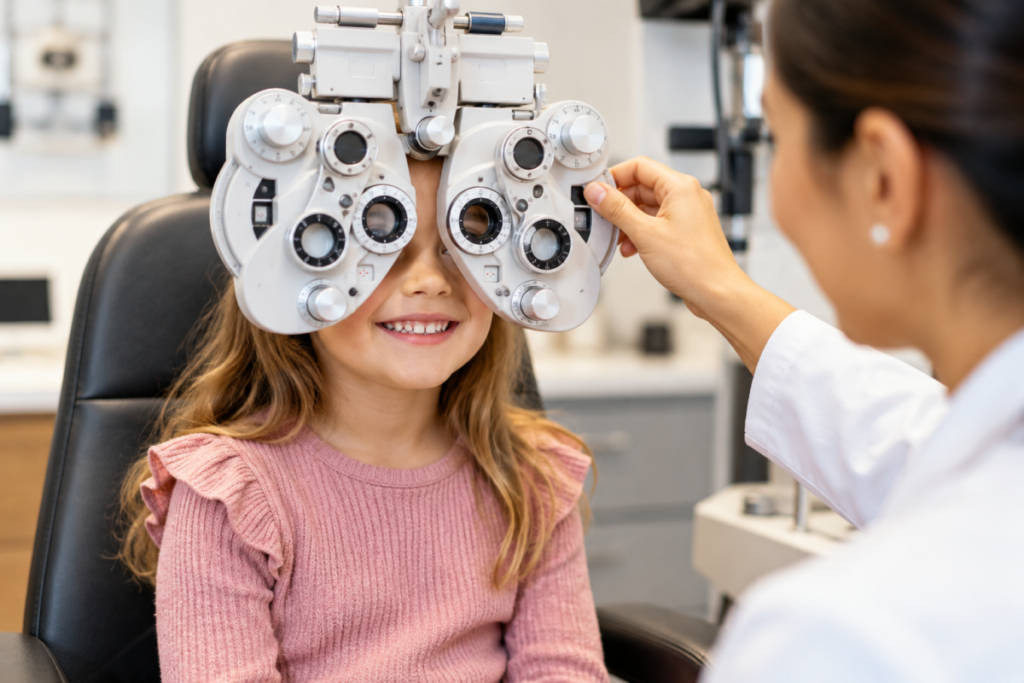
School Vision Screenings vs. Pediatric Eye Exams: What’s the Difference?
School vision screenings and comprehensive eye exams serve different purposes. Both can help identify vision concerns, but they evaluate different aspects of your child’s eyesight.
A school vision screening is designed to identify children who may need further evaluation. A comprehensive eye exam provides a more detailed assessment of vision, eye function, and overall eye health.
What Does a School Vision Screening Actually Test?
School vision screenings typically focus on visual acuity, or how clearly a child can see letters, numbers, or symbols at a particular distance.
Depending on the screening program, additional tests may evaluate other aspects of vision. However, screenings generally do not provide the same detailed evaluation as an examination performed by an eye doctor.
Common screening components include:
- Distance vision: Identifying difficulty seeing objects or letters across a room.
- Basic eye alignment: Checking for noticeable signs that the eyes are not working together.
- Referral indicators: Identifying children who may benefit from further testing.
According to the American Association for Pediatric Ophthalmology and Strabismus (AAPOS), vision screening is an important way to identify children who may have vision problems.
However, passing a screening does not guarantee that every aspect of your child’s vision is functioning properly.
What Can a Comprehensive Pediatric Eye Exam Detect?
A comprehensive eye exam evaluates more than how clearly your child can see a classroom board.
An eye doctor can assess several aspects of visual function and eye health that may not be fully evaluated during a school screening.
These include:
- Nearsightedness (myopia): Difficulty seeing distant objects clearly.
- Farsightedness (hyperopia): A focusing condition that may cause visual discomfort or blurred vision.
- Astigmatism: An irregular curvature of the eye that can affect clarity.
- Eye coordination: How effectively both eyes work together.
- Focusing ability: How well the eyes adjust between near and distant objects.
- Eye health: Evaluation for signs of eye disease or other abnormalities.
The American Optometric Association (AOA) emphasizes the importance of comprehensive eye examinations for evaluating children’s visual development.
These exams help identify problems that might otherwise go unnoticed until they begin affecting daily activities.
Can My Child Have Vision Problems Even After Passing a School Screening?
Yes. Children can pass school vision screenings and still experience vision problems that interfere with reading, concentration, or classroom participation.
For example, a child might see the classroom board clearly but struggle to maintain comfortable vision while reading a book.
Other children may experience headaches, eye fatigue, or difficulty switching their focus between a worksheet and the front of the classroom.
Watch for symptoms such as:
- Frequent headaches after reading or homework
- Squinting or closing one eye
- Holding books or tablets unusually close
- Complaining about blurry or double vision
- Losing their place frequently while reading
- Rubbing their eyes during visually demanding activities
These symptoms do not automatically mean your child has a vision disorder. However, they are good reasons to schedule a comprehensive eye examination.
Some children have no noticeable symptoms, making routine eye care especially valuable.
How Often Should Children Have Comprehensive Eye Exams?
Children should receive age-appropriate eye examinations throughout development, even when they do not report vision problems.
The American Optometric Association recommends comprehensive eye examinations during infancy, preschool years, and regularly throughout the school years, with frequency based on age, risk factors, and professional recommendations.
Children who wear glasses, have existing eye conditions, or experience vision changes may need more frequent visits.
A helpful approach for parents includes:
- Schedule an early childhood eye exam. Early evaluations help identify concerns during important developmental stages.
- Follow recommended school-age exam schedules. Vision can change as children grow and academic demands increase.
- Pay attention to new symptoms. Headaches, squinting, and changes in reading comfort deserve attention.
- Follow up after a failed screening. A referral from a school screening should lead to a professional eye evaluation.
For families in Plano and surrounding North Texas communities, planning eye exams before the school year can make it easier to address vision concerns before classroom demands increase.
Why Is Early Detection Important for Learning and Development?
Identifying vision problems early can help children see more comfortably and participate more confidently in school and everyday activities.
Vision supports reading, writing, sports, and many other childhood activities. When a child has an uncorrected vision problem, these tasks may become more challenging.
The Centers for Disease Control and Prevention (CDC) recognizes the importance of early identification and treatment of vision problems in children.
For example, correcting nearsightedness may help a student see classroom presentations clearly. Addressing certain focusing or eye coordination problems may also improve visual comfort during near work.
However, learning difficulties can have many causes. A comprehensive eye exam is one important part of evaluating a child’s needs, not a replacement for educational or developmental assessments.
Frequently Asked Questions About Children’s Vision Screenings
Does my child need an eye exam if they passed their school vision screening?
Yes. A passing result does not rule out every vision or eye health problem. A comprehensive eye exam evaluates additional aspects of vision that a basic screening may not assess.
At what age should my child first see an eye doctor?
The American Optometric Association recommends a comprehensive eye examination between 6 and 12 months of age, another between ages 3 and 5, and an examination before first grade. Your eye doctor can recommend follow-up intervals based on your child’s individual needs.
Can poor eyesight affect school performance?
Yes. Uncorrected vision problems can make reading, viewing classroom materials, and completing visually demanding tasks more difficult. An eye exam can help determine whether vision is contributing to those challenges.
What happens if my child fails a school vision screening?
Schedule a comprehensive eye examination with an eye care professional. A failed screening indicates that further evaluation is needed, but it does not necessarily mean your child has a serious eye condition.
Give Your Child a Clearer View of the School Year
A school vision screening is a useful starting point, but it cannot replace a comprehensive evaluation of your child’s vision and eye health.
At The Plano Eye Care Center, we’re committed to helping children develop and maintain healthy vision as they grow. Whether your child passed a school screening or has started showing signs of vision difficulties, our team is here to help.
Give your child the confidence that comes with clearer, more comfortable vision. Contact The Plano Eye Care Center to schedule a comprehensive eye exam today.