
Can Lack of Sleep Cause Dry Eyes and Other Eye Problems?
Yes, lack of sleep can contribute to dry, irritated, tired, and uncomfortable eyes. Research has found that sleep deprivation can reduce tear secretion and disrupt tear-film stability, while poor sleep quality is strongly associated with dry eye disease. Getting adequate, consistent sleep supports the tear film and overall eye comfort, although persistent symptoms may require an eye examination.
At The Plano Eye Care Center, we know healthy vision involves more than updating your glasses or contact lens prescription. Everyday habits, including how well you sleep, can affect how your eyes feel and function. When patients experience burning, redness, dryness, eye fatigue, or other recurring symptoms, understanding lifestyle factors can be an important part of identifying the problem. Sleep is especially worth considering because research increasingly shows a relationship between sleep quality and the health of the ocular surface. By combining comprehensive eye care with personalized recommendations, our team can help patients understand their symptoms and take practical steps toward healthier, more comfortable eyes.
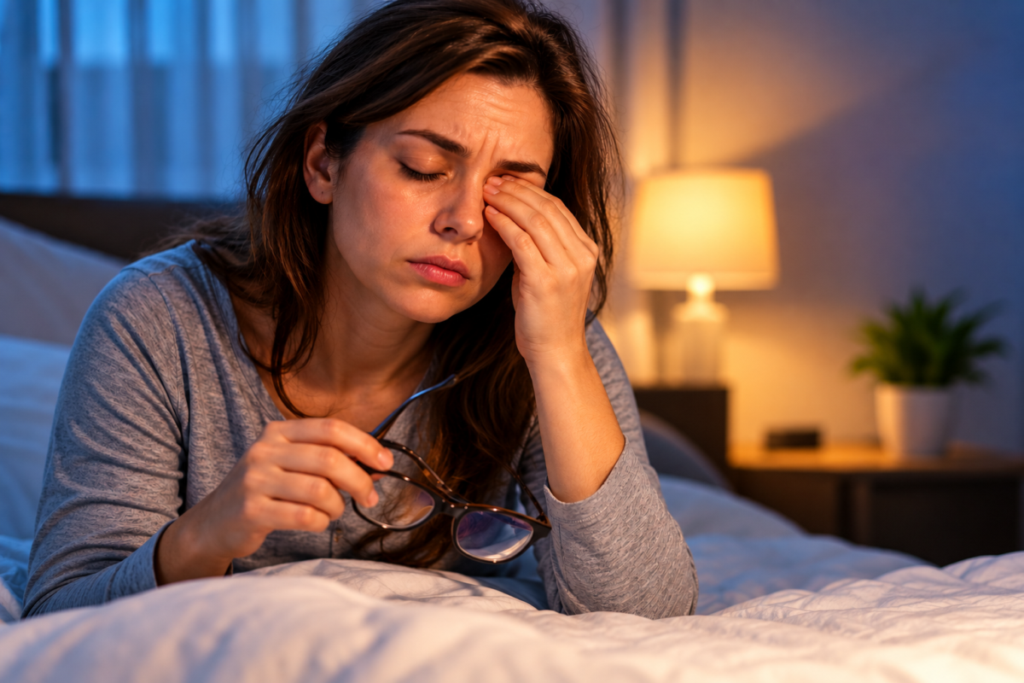
How Sleep Quality Can Affect Your Eyes and Tear Film
Sleep gives your body important time to rest and recover, and your eyes are no exception. Insufficient or poor-quality sleep has been associated with dry eye symptoms, changes in tear production, and problems with tear-film stability.
According to the Centers for Disease Control and Prevention (CDC), adults ages 18 to 60 should generally get at least seven hours of sleep per night. CDC data published in 2026 found that 30.5% of U.S. adults reported sleeping less than seven hours on average in 2024.
Can Lack of Sleep Cause Dry Eyes?
Yes, insufficient sleep can contribute to conditions that cause or worsen dry eye symptoms. In a controlled study published in Investigative Ophthalmology & Visual Science, researchers found that sleep deprivation reduced tear secretion and shortened tear-film breakup time. It also increased tear osmolarity, a change associated with ocular surface problems.
A healthy tear film helps lubricate and protect the surface of your eyes. When it becomes unstable, you may experience symptoms such as:
- Burning or stinging
- Redness
- A gritty or sandy sensation
- Watery eyes
- Blurry or fluctuating vision
- Sensitivity to light
- Eye fatigue
The connection also appears in larger population studies. A study of more than 106,000 adults published in Ophthalmic Epidemiology found that shorter sleep and difficulty falling or staying asleep were significantly associated with dry eye disease.
However, an association does not mean that poor sleep is always the sole cause of dry eye. Screen use, contact lenses, medications, environmental conditions, eyelid problems, age, and certain health conditions can also contribute.
Why Do Your Eyes Feel Tired After a Bad Night’s Sleep?
Tired-feeling eyes after inadequate sleep can result from dryness, eye strain, and changes in the ocular surface. Your eyes may feel heavy, irritated, sore, or more sensitive after a poor night’s rest.
One clinical study found that a night of sleep deprivation decreased tear secretion and tear-film stability in healthy participants. This provides a possible explanation for why your eyes may feel unusually dry or uncomfortable the morning after staying up late.
Screen habits can add to the problem. If staying awake longer also means spending extra hours looking at a phone, computer, or television, your eyes may experience additional visual strain.
Try these practical habits when your eyes feel fatigued:
- Prioritize a full night’s sleep.
- Take regular breaks from digital screens.
- Blink fully and frequently during concentrated screen use.
- Avoid rubbing tired or irritated eyes.
- Ask your eye doctor about appropriate lubricating eye drops if dryness persists.
Recurring eye fatigue should not automatically be blamed on lack of sleep. An outdated prescription, dry eye disease, focusing problems, or another eye condition could also be involved.
Is There a Connection Between Dry Eye and Poor Sleep Quality?
Research suggests that dry eye and poor sleep are closely associated, and the relationship may work in both directions. Poor sleep may worsen ocular discomfort, while uncomfortable dry eye symptoms may make restful sleep more difficult.
A 2024 systematic review and meta-analysis published in BMC Ophthalmology analyzed 21 studies involving more than 419,000 participants. Researchers found that people with dry eye had worse overall sleep quality and a higher risk of sleep disorders than people without dry eye.
An earlier systematic review and meta-analysis also found that people with dry eye tended to experience poorer sleep quality, greater daytime sleepiness, and less total sleep.
These findings do not prove that every sleep problem causes dry eye or vice versa. They do, however, highlight why both sleep habits and eye health may deserve attention when dryness becomes persistent.
How Much Sleep Do You Need for Healthy Eyes?
Most adults should aim for at least seven hours of sleep, although individual sleep needs vary by age. The CDC recommends seven or more hours for adults ages 18 to 60, seven to nine hours for adults ages 61 to 64, and seven to eight hours for adults 65 and older.
Improving sleep habits can support overall health while potentially reducing some factors associated with uncomfortable eyes. Helpful habits include:
- Going to bed and waking up at consistent times
- Allowing enough time for the recommended amount of sleep
- Creating a comfortable sleep environment
- Reducing unnecessary screen use close to bedtime
- Getting natural light and physical activity during the day
- Discussing persistent sleep difficulties with a healthcare provider
Sleep is not a substitute for professional eye care. If your symptoms continue despite improving your sleep habits, an eye exam can help identify whether dry eye disease, a prescription change, or another condition is responsible.
When Should Tired or Dry Eyes Be Checked by an Eye Doctor?
Dry or tired eyes should be evaluated when symptoms are persistent, worsening, painful, or interfering with everyday activities. Occasional tired eyes after a late night may improve with rest, but repeated symptoms deserve closer attention.
Consider scheduling an eye exam if you experience:
- Dryness that occurs frequently
- Persistent burning, itching, or irritation
- Blurry or fluctuating vision
- Increasing sensitivity to light
- Difficulty wearing contact lenses comfortably
- Eye discomfort that does not improve with rest
- Symptoms that interfere with reading, driving, computer work, or other activities
Sudden vision loss, severe eye pain, a sudden increase in flashes or floaters, or a curtain-like shadow in your vision requires prompt medical attention rather than simply getting more sleep.
An eye examination can help determine whether your symptoms are related to dry eye, visual strain, your prescription, or another eye health issue.
Frequently Asked Questions About Sleep and Eye Health
Can Lack of Sleep Make Your Vision Blurry?
Lack of sleep may contribute to tired, dry, or strained eyes, which can sometimes make vision feel temporarily less clear. Persistent, sudden, or significant blurry vision should be evaluated by an eye care professional.
Can Sleeping More Help Dry Eyes?
Adequate sleep may help reduce a factor associated with dry eye symptoms, particularly if you regularly get insufficient or poor-quality sleep. However, chronic dry eye can have several causes and may require specific treatment.
Why Are My Eyes Red When I Don’t Get Enough Sleep?
Poor sleep can be associated with ocular surface irritation and dryness, which may contribute to redness and discomfort. Frequent or severe redness can have other causes and should be evaluated if it persists.
How Many Hours of Sleep Should Adults Get?
According to the CDC, adults ages 18 to 60 should generally get at least seven hours of sleep each night. Sleep recommendations vary somewhat for older adults.
Give Your Eyes the Rest and Care They Need
Quality sleep supports your overall health, and research suggests it also has an important relationship with eye comfort and the ocular surface. If your eyes regularly feel dry, irritated, tired, or blurry, improving your sleep habits is a useful step, but persistent symptoms should not be ignored.
Experiencing tired or uncomfortable eyes? Contact The Plano Eye Care Center to schedule an eye exam and learn what may be causing your symptoms.