
How Does Your Vision Change as You Get Older?
Vision commonly changes with age because the eye’s lens becomes less flexible and eye diseases become more common. Starting in your 40s, you may notice more difficulty focusing up close, needing brighter light, or adjusting to glare. Later in life, the risks of cataracts, glaucoma, and age-related macular degeneration increase. Regular comprehensive eye exams can distinguish normal aging from conditions that need treatment.
At The Plano Eye Care Center, we understand that changes in eyesight can be gradual, making it difficult to know what is simply part of getting older and what deserves closer attention. Our goal is to help patients understand their changing vision, identify concerns early, and find solutions that support clear, comfortable sight at every stage of adulthood. Routine eye care becomes especially important with age because some potentially serious eye diseases can develop before noticeable symptoms appear. With personalized exams and appropriate vision correction, many age-related changes can be managed effectively.
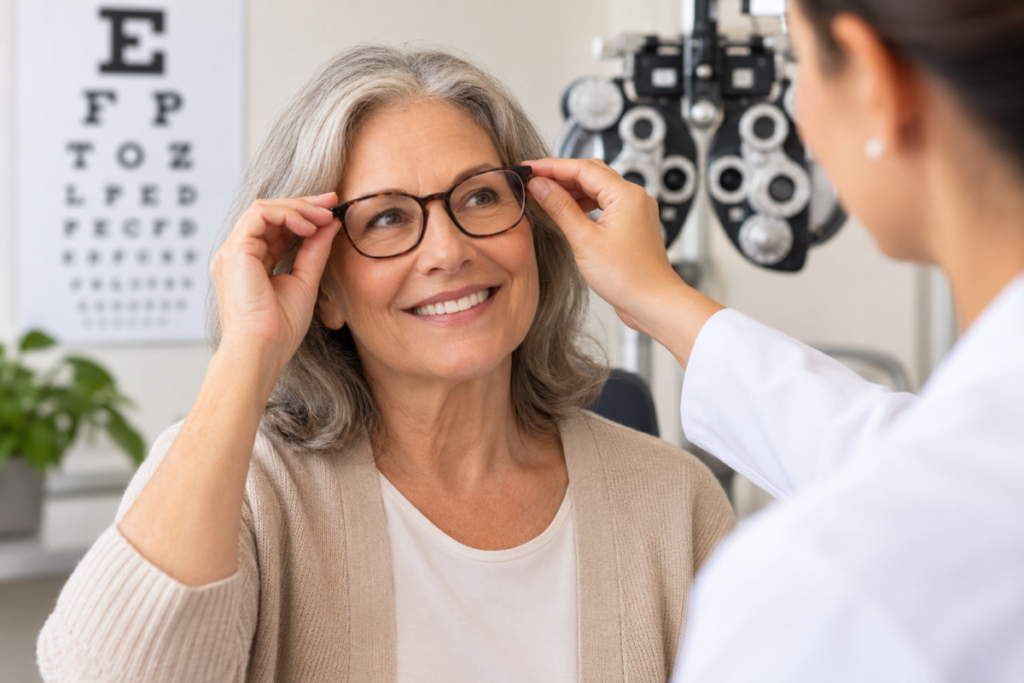
Age-Related Vision Changes and What to Expect
Some changes in eyesight are a normal part of aging, while significant vision loss is not. According to the National Eye Institute (NEI), aging increases the risk of several eye diseases and conditions, but vision loss does not have to be a normal part of getting older.
Understanding what to expect can help you recognize when it is time to schedule an eye exam.
What Vision Changes Are Normal After Age 40?
Difficulty focusing on nearby objects is one of the most common vision changes after 40. This condition is called presbyopia. The National Eye Institute explains that presbyopia occurs because the lens inside the eye becomes harder and less flexible with age, making it more difficult to focus light properly when looking at something close.
Common signs of presbyopia include:
- Holding your phone, menu, or book farther away to read
- Needing brighter light for close-up tasks
- Experiencing tired or strained eyes while reading
- Developing headaches after extended close work
- Finding small print increasingly difficult to see
Presbyopia typically becomes noticeable after age 45, according to the NEI. It can usually be managed with reading glasses, prescription eyeglasses, contact lenses, or other vision-correction options.
Other gradual changes can occur too. You may notice that it takes longer for your eyes to adjust when moving between bright and dim environments, or that driving at night feels more challenging than it once did.
Which Eye Conditions Become More Common as You Age?
Cataracts, glaucoma, age-related macular degeneration (AMD), and diabetic eye disease are among the important conditions to watch for as you get older. The CDC identifies age-related eye diseases as leading causes of blindness and low vision in the United States.
Cataracts occur when the normally clear lens of the eye becomes cloudy. Symptoms can include blurry or hazy vision, faded colors, sensitivity to bright lights, halos around lights, and difficulty seeing at night. The National Eye Institute reports that more than half of Americans age 80 and older either have cataracts or have already undergone cataract surgery.
Age-related macular degeneration affects the macula, the part of the retina responsible for detailed central vision. AMD can eventually cause blurry, distorted, or missing areas in your central vision. Risk increases with age, particularly after age 55.
Glaucoma damages the optic nerve and can gradually reduce vision. Because some forms can progress without obvious early symptoms, regular eye exams are especially valuable for detecting the disease.
Diabetic retinopathy can occur when diabetes damages blood vessels in the retina. The CDC emphasizes that regular dilated eye exams can identify diabetic eye problems early, sometimes before a person notices changes in sight.
How Can You Tell Normal Aging From a Serious Vision Problem?
Gradual difficulty with close-up focusing can be normal, but sudden, significant, or unexplained changes in vision should not simply be blamed on age.
Schedule an eye examination if you notice changes such as:
- Increasingly blurry or cloudy vision
- New difficulty seeing at night
- Straight lines appearing wavy or distorted
- Loss of central or peripheral vision
- Frequent changes to your glasses prescription
- New or worsening glare and halos
- A noticeable difference in vision between your eyes
Sudden vision loss or a sudden major change in eyesight requires prompt medical attention. Likewise, new flashes of light, a sudden increase in floaters, or a curtain or shadow across your field of vision can indicate an urgent eye problem.
One reason routine examinations matter is that symptoms are not always an early warning. The NEI notes that many eye diseases have no early symptoms, while comprehensive dilated eye exams can help detect conditions earlier, when they may be easier to treat.
How Often Should Older Adults Have Their Eyes Checked?
Eye exam frequency depends on your age, medical history, family history, and individual eye health risks. Your eye doctor can recommend the right schedule based on those factors.
The CDC recommends comprehensive dilated eye examinations every one to two years for people over age 60. People with diabetes or high blood pressure should ask their healthcare provider how often they need an exam, and many need a dilated eye exam every year.
Regular eye exams can evaluate more than whether your glasses prescription has changed. They allow an eye care professional to examine the health of the eye and look for signs of conditions that might otherwise go unnoticed.
What Can You Do to Protect Your Vision as You Get Older?
Healthy habits and preventive eye care can help protect your sight throughout adulthood. While you cannot stop the natural aging process, you can address several factors that influence long-term eye health.
Helpful habits include:
- Keep up with comprehensive eye exams. Early detection can make an important difference for many eye conditions.
- Wear UV-blocking sunglasses outdoors. Long-term sun exposure is a risk factor for cataracts, according to the National Eye Institute.
- Manage diabetes, blood pressure, and cholesterol. Chronic health conditions can affect the eyes and increase the risk of vision problems.
- Avoid smoking. Smoking is associated with an increased risk of age-related eye disease, including AMD.
- Eat a balanced diet. The CDC recommends foods such as dark leafy greens and fish rich in omega-3 fatty acids as part of healthy vision habits.
- Pay attention to changes. Do not wait for your next routine appointment if you develop sudden or concerning vision symptoms.
These steps become increasingly important with age, but they are useful at every stage of life.
Frequently Asked Questions About Aging and Vision
At What Age Does Your Eyesight Usually Start Changing?
Many adults first notice age-related difficulty focusing up close in their 40s. The National Eye Institute says presbyopia usually develops after age 45 and is a normal part of aging.
Is It Normal for Eyesight to Get Worse With Age?
Certain changes, especially difficulty focusing on close objects, are normal. However, significant vision loss is not an inevitable part of aging and may be related to an eye disease that should be evaluated.
Why Is It Harder to See at Night as You Get Older?
Age-related changes and conditions such as cataracts can make low-light vision more difficult and increase sensitivity to headlights or glare. Trouble seeing at night that is new or worsening should be discussed during an eye exam.
Can Regular Eye Exams Prevent Vision Loss?
Eye exams cannot prevent every eye condition, but they can identify diseases earlier so treatment can begin when appropriate. The CDC estimates that half of visual impairment and blindness can be prevented through early diagnosis and treatment.
Keep Your Vision Clear Through Every Stage of Life
Changes in your eyesight may be part of getting older, but you do not have to guess whether a change is normal. Routine eye care can help you stay ahead of changing prescriptions, monitor your eye health, and identify conditions that require attention.
Ready to protect your vision as you age? Contact The Plano Eye Care Center to schedule your next comprehensive eye exam and get personalized guidance for your changing vision.